

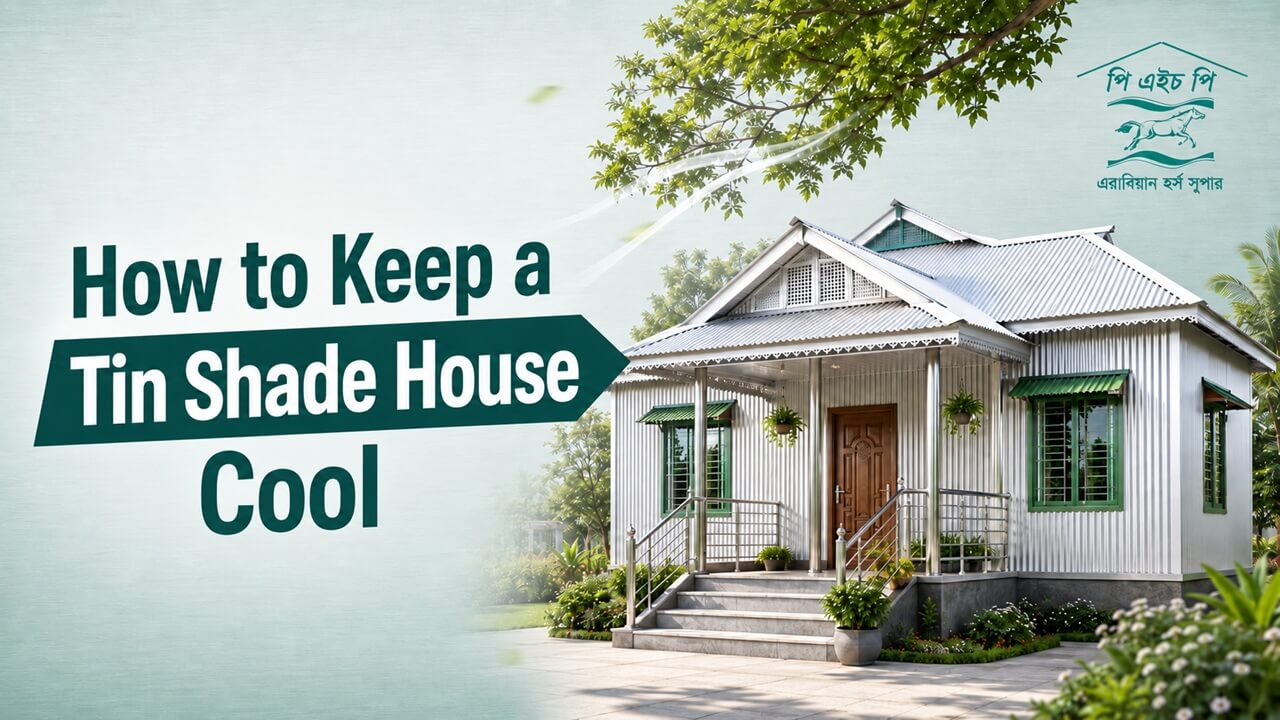
Practical Ways to Keep a Tin Shade House Cool in Summer
A tin shade house is a common and practical housing choice in Bangladesh. Locally known as a tiner ghor, this type of house is comparatively affordable, quick to construct and suitable for rural and semi-urban areas. However, keeping the rooms comfortable during the intense summer heat can be challenging.
Metal roofing sheets become hot when exposed to direct sunlight and gradually transfer that heat into the rooms below. Without a ceiling, insulation or adequate ventilation, the accumulated heat can make a tin shed house uncomfortable during the day and even after sunset.
The good news is that practical improvements can reduce heat transfer and improve indoor comfort. This guide explains why tin houses become hot, how to keep them cooler and what to consider when constructing a new house.
Why Does a Tin Shade House Become So Hot?
The metal roof of a tin house absorbs heat quickly under direct sunlight. The accumulated heat then radiates downward and raises the temperature inside the rooms. Dark-coloured roofing materials generally absorb more heat than light-coloured surfaces.
A low roof and limited airflow can make the situation worse. Warm air naturally rises, but when there are no upper ventilators or suitable openings, it becomes trapped beneath the roof.
The main reasons a Tin Shade House becomes excessively hot include:
- ✅ Direct sunlight falling on the roof throughout the day
- ✅Dark-coloured roofing surfaces
- ✅ Insufficient space between the roof and living area
- ✅ Absence of a separate ceiling
- ✅ Lack of thermal insulation
- ✅ Inadequate windows and ventilators
- ✅ Limited cross-ventilation between rooms
- ✅ Lack of trees or external shade around the house
Effective Ways to Keep a Tin Shade House Cool
Before choosing a solution, consider the location of the house, roof height, direction of sunlight, natural airflow and available budget. The same measure may not work equally well for every tin shade house.
In most cases, combining several measures provides better results. For example, a ceiling can reduce radiant heat, insulation can limit heat transfer and upper ventilators can allow accumulated warm air to escape.
1. Apply White or Light-Coloured Coating to the Roof
White and other light-coloured surfaces reflect more sunlight than dark surfaces. Applying a suitable reflective coating can therefore reduce the amount of solar heat absorbed by the roof.
The roof must be cleaned before applying the coating. Rust, dust, loose paint and other contaminants should be removed so that the new layer adheres properly. Choose a coating that is compatible with metal roofing and suitable for outdoor use in Bangladesh.
A light-coloured roof coating may help reduce heat, but its effectiveness depends on product quality, application method and roof condition. It should be considered one part of a complete cooling plan rather than the only solution. If you need heat-reflective roofing materials, you can learn more about the features and uses of Alum Tin and its applications.
2. Install a False Ceiling
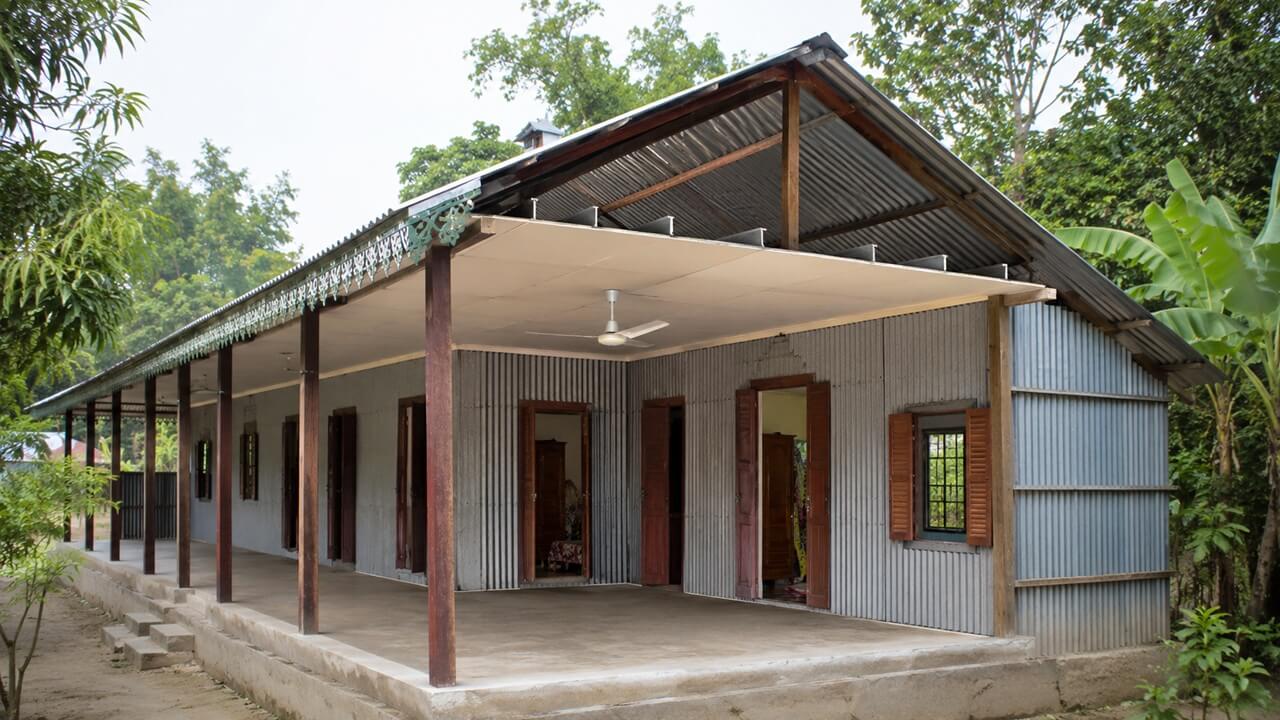
Installing a false ceiling is one of the most effective ways to reduce direct heat inside a tin shade house. It creates a separate barrier between the heated metal roof and the occupied rooms.
An adequate air gap should remain between the roof and the ceiling. This space acts as a thermal buffer and reduces the amount of heat that immediately reaches the living area.
The ceiling must be supported by a safe and durable frame. The selected material should also be appropriate for local humidity, moisture and maintenance conditions. It should not be attached directly to the roofing sheets, because the separation between the two layers is important for heat control.
3. Use Thermal Insulation Materials
Thermal insulation limits the transfer of heat from the roof into the rooms. Depending on the design, insulation may be installed beneath the roofing sheets or between the roof and the false ceiling.
The selected material should be suitable for Bangladesh’s hot and humid climate. Proper installation is essential because trapped moisture can damage the ceiling, insulation or supporting structure over time.
Insulation generally performs better when combined with a ceiling and suitable ventilation. Before installation, an experienced technician should inspect the roof structure and recommend the appropriate material, thickness and placement method. Improving a roof’s thermal insulation can help keep the indoor environment relatively cooler during hot weather. For more information, see this roof insulation guide.
4. Increase the Height of the House
Hot air naturally rises. Therefore, when a house has a higher ceiling, warm air can remain above the occupied area, helping the space below feel comparatively more comfortable.
When building a new tin shade house, carefully plan the room height, roof slope and the space between the ceiling and the roof. For an existing house with a low ceiling, combining a false ceiling with upper-level ventilation can help reduce indoor heat.
5. Ensure Airflow Through Windows and Ventilators
Proper ventilation is essential for keeping a tiner ghor comfortable. Windows placed on opposite walls allow fresh air to enter from one direction and warmer air to exit through the other. This process is known as cross-ventilation.
Ventilators positioned near the upper part of the wall are also useful because warm air naturally rises. These openings allow accumulated heat beneath the roof to escape instead of remaining trapped inside the rooms.
Windows and ventilators should be positioned according to the usual wind direction around the house. In a multi-room home, internal doors, transoms or other suitable openings can help air move from one room to another.
Mesh or protective covers should be installed where necessary to prevent insects, birds and rainwater from entering.
6. Install Windows on Opposite Walls
Whenever possible, install windows on two opposite sides of the room so that air can enter from one direction and exit through the other. Compared with multiple windows on the same wall, windows on opposite walls provide better cross-ventilation and improve indoor airflow.
7. Create Natural Shade Around the House
Trees and plants can reduce direct sunlight on the roof and exterior walls. Shade on the western side can be especially helpful because this side often receives intense afternoon sunlight.
Large trees should not be planted too close to the house. Weak or overhanging branches may damage the roof during storms, while fallen leaves can obstruct gutters and drainage channels.
A veranda, extended roof edge, bamboo screen or separate shade structure can also protect walls and windows from direct sunlight. These features can improve comfort while maintaining the familiar appearance of a traditional Bangladeshi tiner ghor.
Budget-Friendly Ways to Keep a Tin Shade House Cool
The most suitable solution will depend on the condition of the house and the available budget. Improvements can be completed gradually instead of making every change at once.
1. Low-Budget Solutions
For a limited budget, start by improving natural airflow. Keep opposite windows open when the outside temperature is lower, clear any blocked ventilators and use curtains to reduce direct sunlight through windows.
Planting suitable trees, using bamboo screens and creating temporary external shade can also reduce direct heat. Minor gaps, loose fasteners and damaged areas of the roof should be repaired to prevent water leakage.
These measures may not completely solve the heat problem, but they can improve comfort without requiring major structural changes.
2. Medium-Budget Solutions
With a moderate budget, consider installing upper ventilators, applying a reflective roof coating or adding a basic ceiling. Insulation can also be installed in the sections that receive the most direct sunlight.
Before choosing a material, compare its durability, moisture resistance, maintenance requirements and installation cost. Spending slightly more on correct installation can prevent repair expenses later.
3. Long-Term Solutions
For long-term comfort, combine quality roofing sheets, sufficient roof height, a separate ceiling, thermal insulation and planned cross-ventilation.
This integrated approach controls several sources of heat at the same time. It reduces heat absorption, limits downward heat transfer and allows trapped warm air to leave the building.
When constructing a new tin shed house, planning these features from the beginning is usually easier and more cost-effective than modifying the structure later. Before setting a budget, consider the product size, thickness, type of roofing sheet and price variations across different markets. For more details, read our guide to current tin prices
Importance of Quality Tin and Proper Installation
Cooling measures alone cannot provide lasting results if the roofing sheets are poor in quality or incorrectly installed. Roofing sheets should have suitable thickness, strength, coating quality and durability for the intended building.
Proper roof slope and adequate sheet overlap are necessary to prevent water leakage. Fasteners must be installed securely without damaging the sheets, and vulnerable joints should be sealed correctly.
For residential and other construction projects, PHP Arabian Horse Super Dhew Tin can provide a durable roofing solution when the appropriate specification and professional installation method are selected.
The installation should be completed by experienced technicians. Incorrect cutting, insufficient overlap or unsuitable fasteners can reduce roof performance and lead to leakage, corrosion or structural damage.
What to Check Before Building a New Tin Shade House
Preventing excessive heat during construction is generally easier than correcting the problem after the house is complete. Before building a new tin shade house, review the following points: When selecting roofing materials for modern homes, large sheds or commercial buildings, learn more about Profile Sheet and verify the appropriate size and thickness for your project.
- ✅ Direction of direct sunlight throughout the day
- ✅ Usual direction of natural airflow
- ✅ Height, slope and structural design of the roof
- ✅ Space required for a separate ceiling
- ✅ Appropriate thermal insulation material
- ✅ Position and size of windows
- ✅ Placement of upper ventilators
- ✅ Roof overhang or veranda for external shade
- ✅Rainwater drainage around the house
- ✅ Thickness and quality of the roofing sheets
- ✅ Strength of the frame and supporting structure
- ✅ Safe distance between large trees and the building
For a modern residential or commercial structure, you can also learn about profile roofing sheets and select the appropriate dimensions and thickness according to the project requirements.
Before preparing the construction budget, review the current market price, sheet type, thickness and required quantity. Our guide to current tin prices can help you develop a more realistic estimate.
Regular Maintenance for a Comfortable Tiner Ghor
Inspect the roof regularly for rust, loose fasteners, holes, gaps and water leakage. Damaged areas should be repaired promptly, as moisture can reduce the effectiveness of the ceiling and insulation.
Keep windows, upper ventilators and drainage channels clean. Dust, insect nests, leaves and other obstructions can restrict airflow or block rainwater drainage.
Trim risky tree branches before the storm and rainy seasons. If a reflective roof coating has faded or deteriorated, renew it according to the manufacturer’s recommendations.
Regular maintenance helps keep the house comfortable and can extend the service life of the roof and supporting structure.
Conclusion
Keeping a tin shade house cool requires more than choosing a single product or technique. Roof colour, ceiling design, insulation, windows, ventilators, roof height, surrounding shade and routine maintenance all influence indoor comfort.
The best results are achieved when these measures are considered during the planning and construction stages. Owners of an existing Tin Shade House can also improve comfort gradually by prioritising airflow, a separate ceiling and protection from direct sunlight.
At PHP Arabian Horse Super, we focus on quality roofing products, advanced manufacturing technology and strict quality control. To learn more about our roofing solutions, contact us or visit your nearest authorised sales centre.