

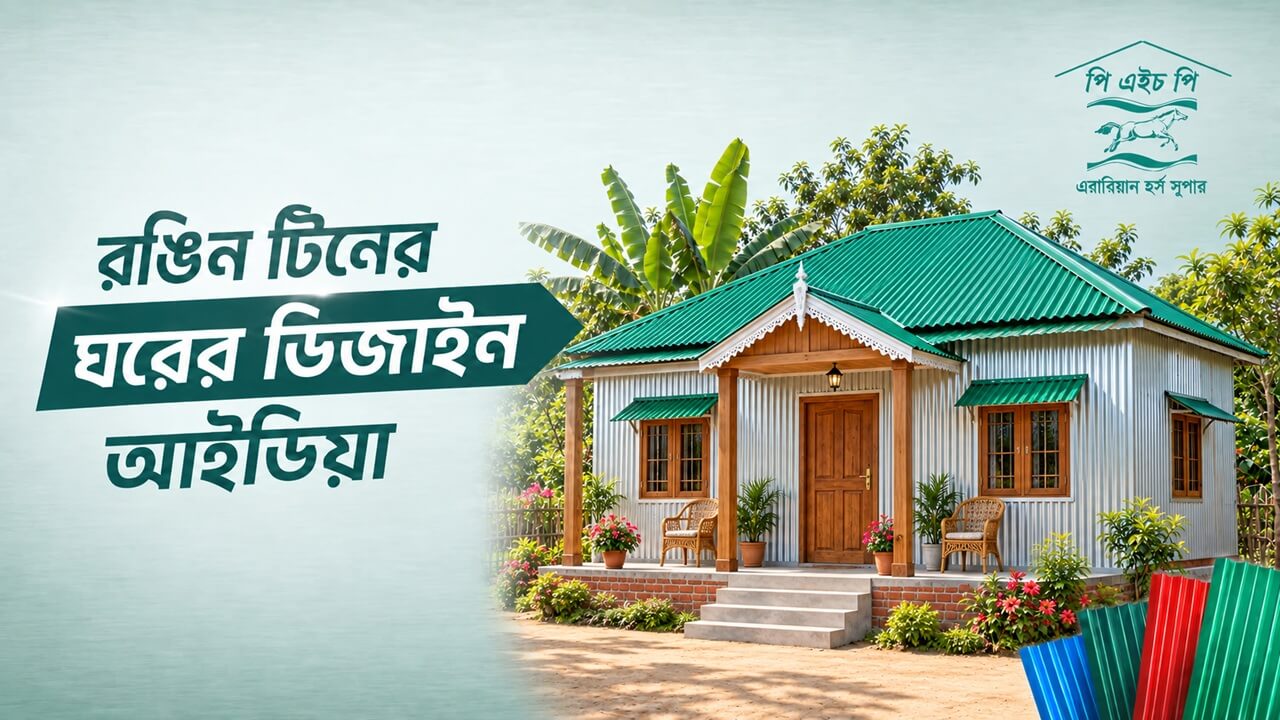
Introduction
A well-planned rongin tiner ghorer design idea can turn a simple tin house into a stylish, comfortable, and practical home. In Bangladesh, colored tin houses are no longer limited to basic rural shelters. Today, they are used for family homes, farmhouses, small offices, shops, garden cottages, resorts, and commercial spaces.
The biggest advantage of colored tin is flexibility. You can create a clean village home with a blue roof, a nature-friendly farmhouse with green tin, a modern office with gray panels, or even a premium cottage using wood, glass, and dark roofing sheets.
However, a beautiful tin house is not only about color. The roof slope, ventilation, insulation, frame quality, drainage, room layout, and maintenance plan all matter. Bangladesh has hot summers, heavy rain, humidity, and occasional storms, so the design must be attractive and weather-smart at the same time.
This guide covers 10 modern colored tin house design ideas, color combinations, heat control tips, maintenance advice, and practical recommendations for building a durable and comfortable tin house.
In Bangladesh, PHP Arabian Horse Super Dhew Tin and PHP Arabian Horse Super Color Tin are recognized as trusted and popular roofing solutions due to their long-lasting quality, advanced coating technology, and reliable performance.
Known for their durability, weather resistance, and attractive finish, these roofing sheets are widely used in residential, commercial, and industrial construction projects across the country.
10 Modern Rongin Tiner Ghorer Design Ideas
Below are 10 practical and visually appealing colorful tin house design ideas with pictures, carefully selected based on Bangladesh’s climate, budget considerations, and both rural and modern lifestyles.
These designs combine durability, affordability, and aesthetic appeal, making them suitable for homeowners looking for comfortable, stylish, and cost-effective housing solutions. Whether you prefer a traditional village-style home or a contemporary modern design, these ideas can help you find inspiration for your next tin house project.
1. Modern Single-Story Colored Tin House
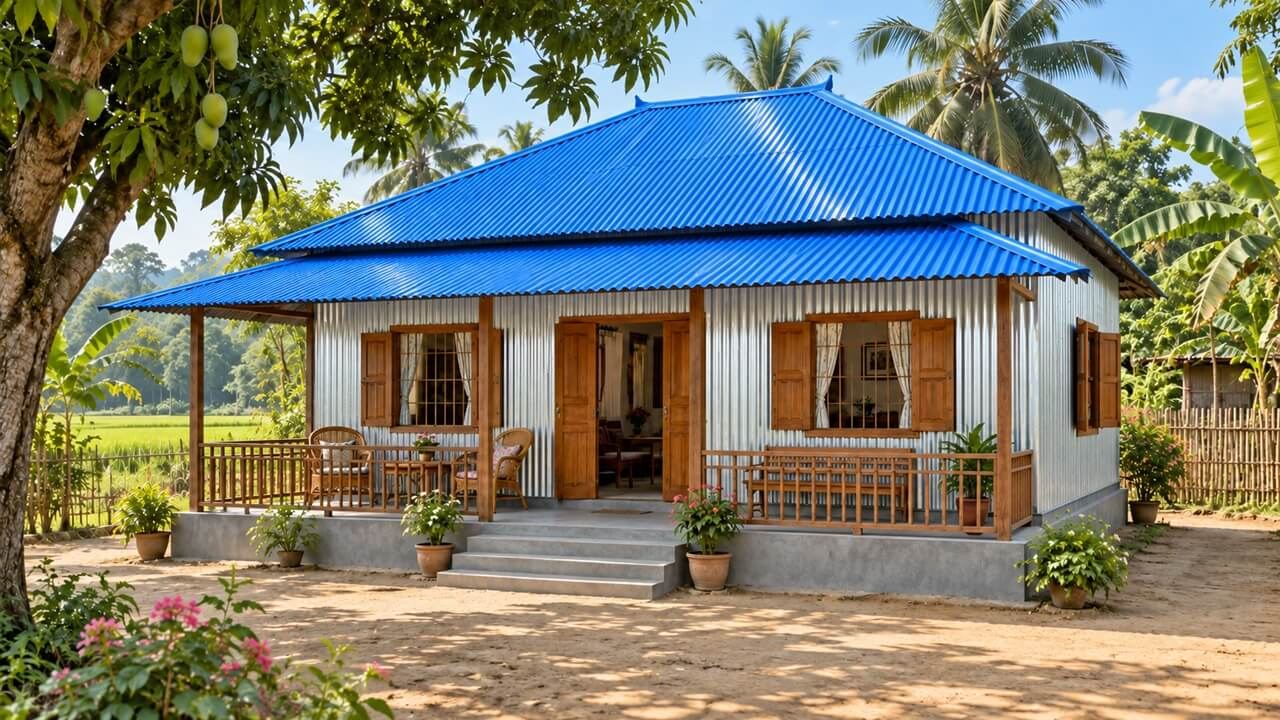
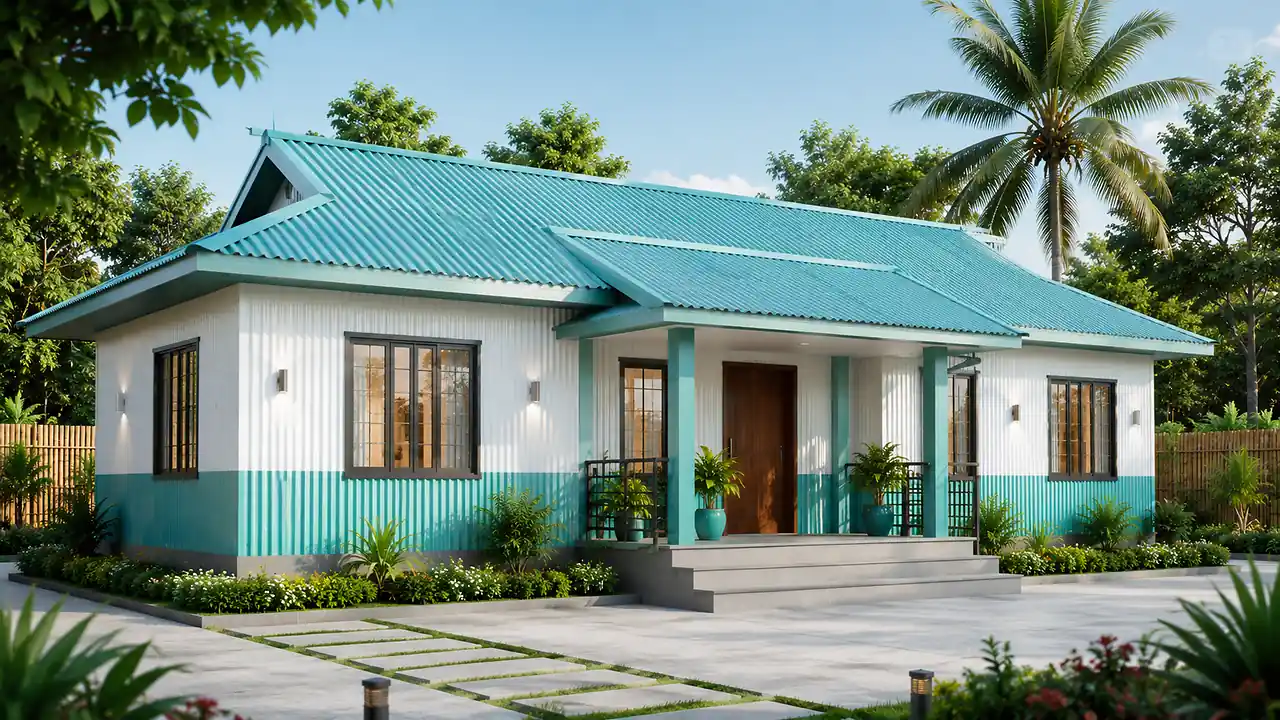
A modern single-story tin house is ideal for small families, rural homes, and semi-urban areas. This design usually includes a front door in the center, windows on both sides, a small veranda, and a clean sloped roof.
For a polished look, use white or cream walls with a blue, gray, or green tin roof. Keep the front elevation simple, add a small walkway, and use matching window frames.
Best For: Small families, village homes, guest houses, and budget-friendly housing
2. Village Tin House with a Front Veranda
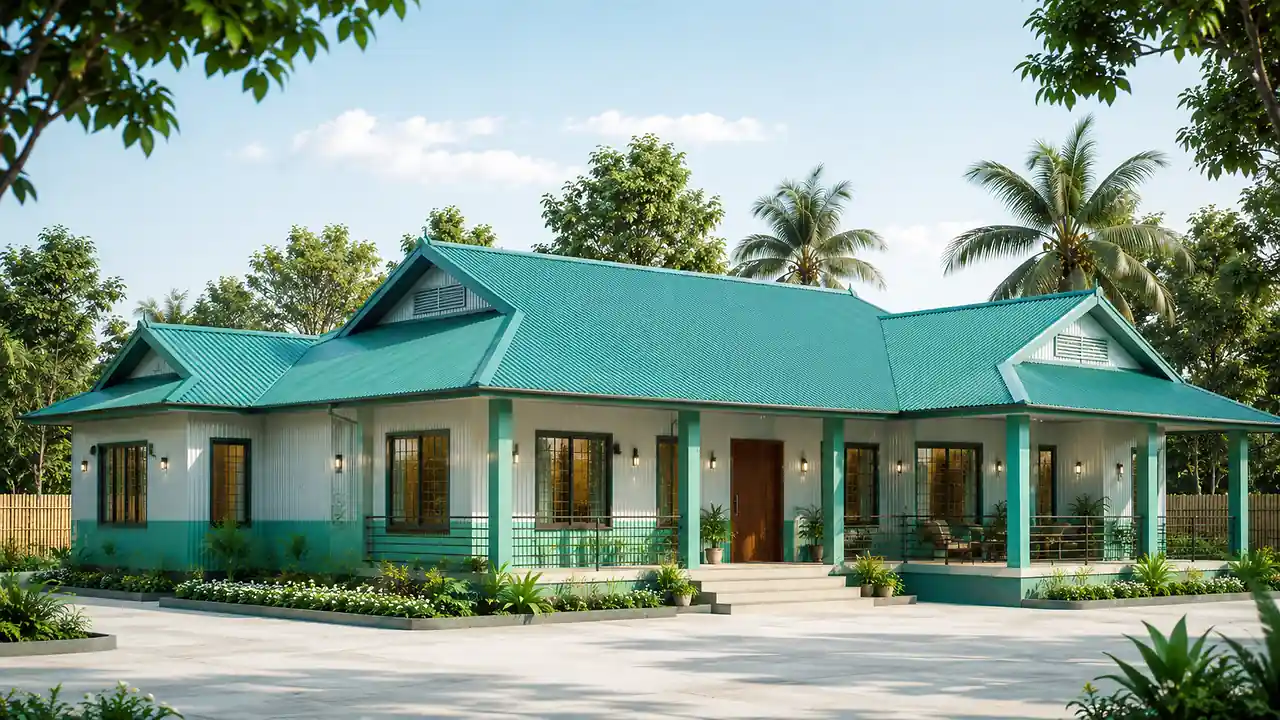
A veranda is one of the most useful features in a Bangladeshi home. It provides space for sitting, receiving guests, doing light household work, and enjoying rainy weather without getting wet.
This design works well with a wide front veranda, extended roof shade, and simple wooden or metal posts. A green or red roof with light-colored walls can create a warm village look.
Best For: Rural homes, family houses, ancestral homes, and village guest houses
3. Minimalist Colored Tin House
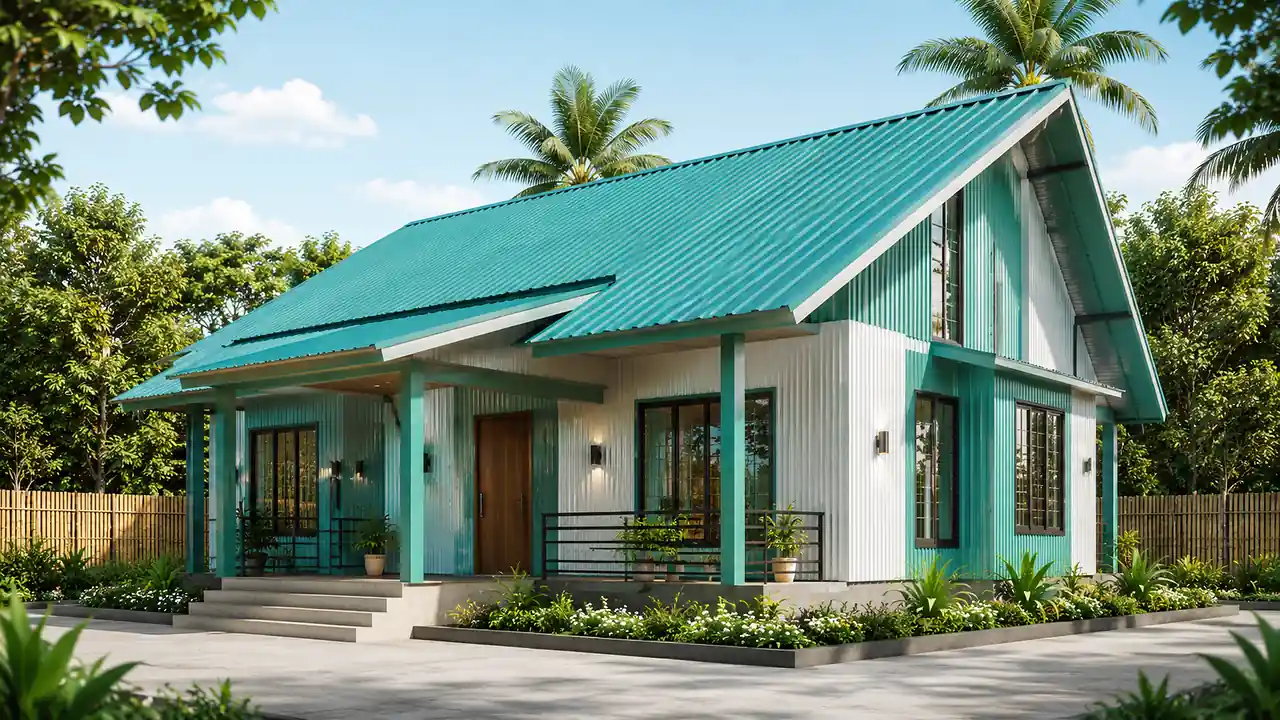
A minimalist tin house focuses on clean lines, simple colors, and practical use of space. It avoids unnecessary decoration and keeps the exterior neat.
Gray, white, black, and light blue work well for this style. Add large windows, a simple front path, and a few plants to create a modern but low-maintenance look.
Best For: Young couples, small families, studio homes, resort cottages, and compact plots
4. Two-Room Tin House for a Small Family
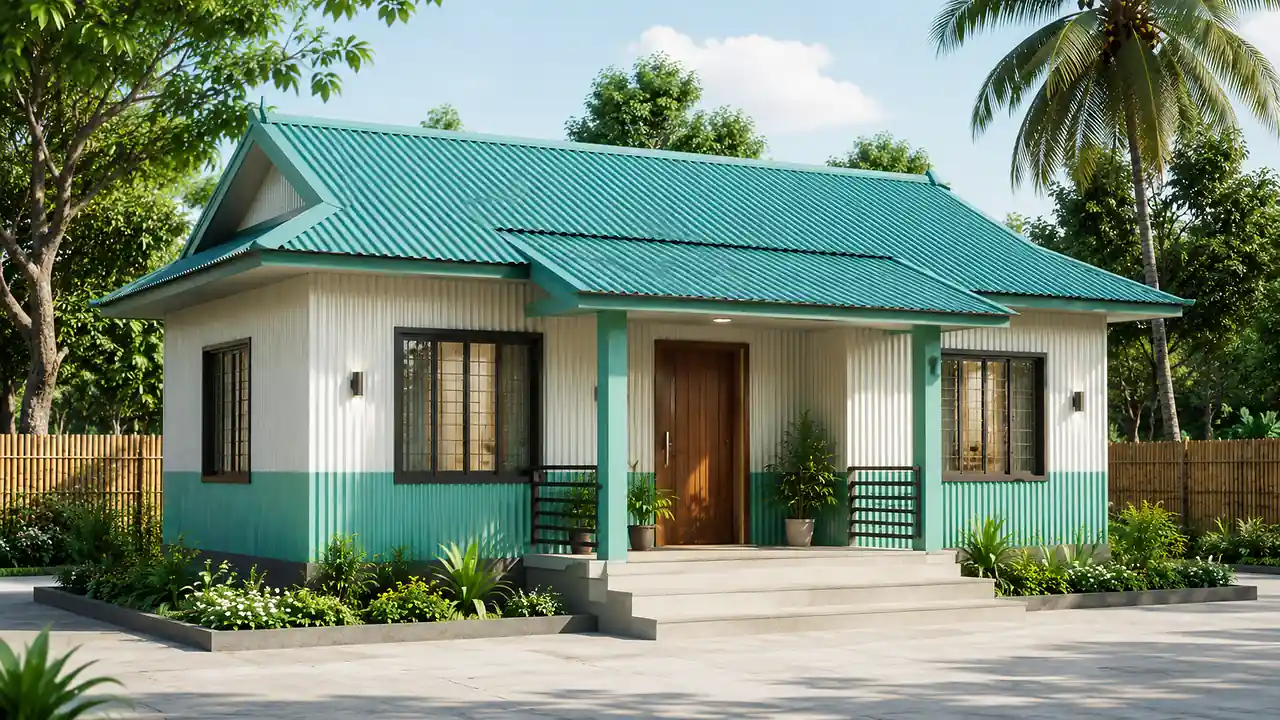
A two-room tin house is one of the most practical designs for small families. It can include two bedrooms, a small living area, a kitchen, a bathroom, and a compact veranda.
The layout is important. Place windows on opposite walls when possible to create cross ventilation. Keep the kitchen ventilated and separate from sleeping areas if space allows.
Best For: Small families, newly married couples, rental homes, and worker housing
5. Colored Tin House with Front Garden
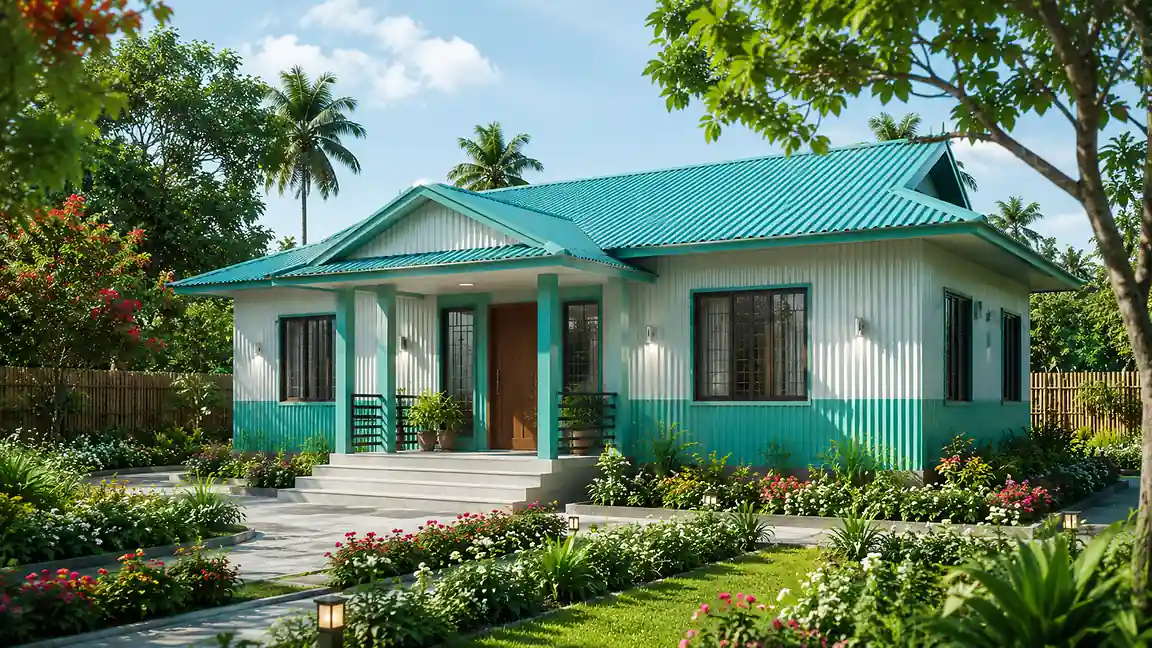
If you have extra space in front of the house, a small garden can dramatically improve the appearance. Grass, flowering plants, a narrow walkway, outdoor lights, and a small seating area can make the house feel more welcoming.
Green, brown, and cream color combinations work especially well with garden-based designs. Plants also provide shade and help reduce heat around the house.
Best For: Farmhouses, rural homes, resorts, and private cottages
6. L-Shaped Colored Tin House
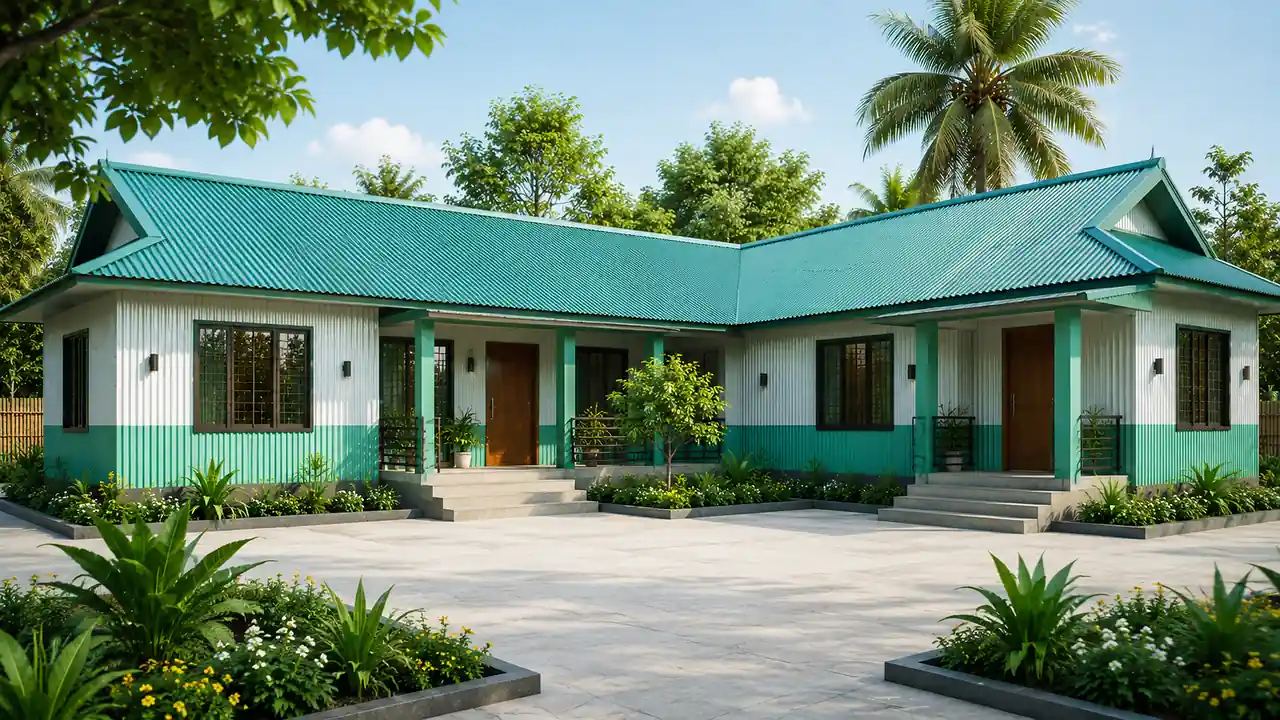
An L shaped tin house is useful for medium or large land. It allows you to separate living areas, bedrooms, kitchen, dining space, or storage in a more organized way.
The open corner inside the L shape can be used as a courtyard, garden, or outdoor sitting area. This design also offers better privacy for larger families.
Best For: Large families, village homes, farmhouses, and ancestral properties
7. Sloped Roof Modern Tin House
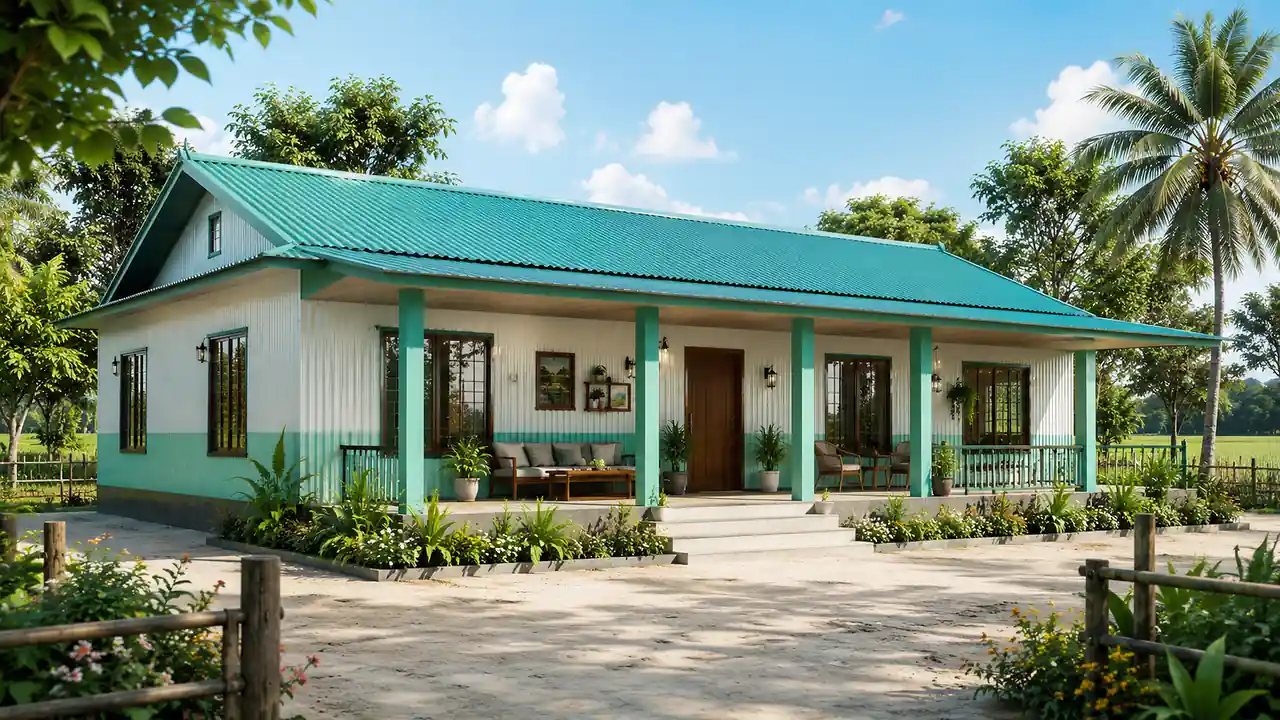
A sloped roof is both stylish and functional. In Bangladesh, where heavy rain is common, a sloped roof helps water flow down quickly and protects the structure from leakage.
You can use a single-slope roof for a contemporary look or a double-slope roof for a more traditional style. Add high ceilings and large windows to make the interior feel spacious.
Best For: Rain-prone areas, cottages, village homes, and open land houses
8. Duplex-Style Tin House
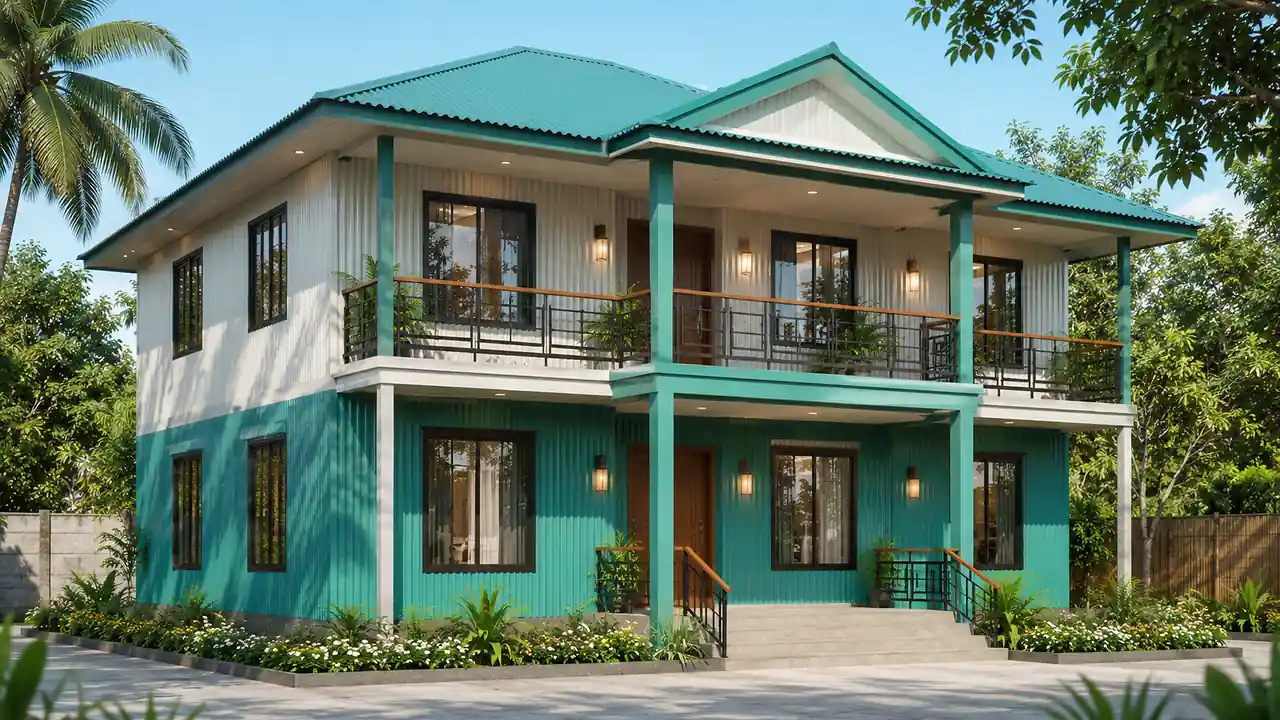
A duplex-style tin house does not always mean a full concrete two-story building. It can also mean a taller structure, loft-style space, or a two-level visual design using metal frames and tin sheets.
This design looks premium and uses vertical space efficiently. However, it requires a stronger foundation, better load planning, safe stairs, and skilled construction.
Best For: Premium farmhouses, resort cottages, larger families, and modern rural homes
9. Tin House with Wood Finish
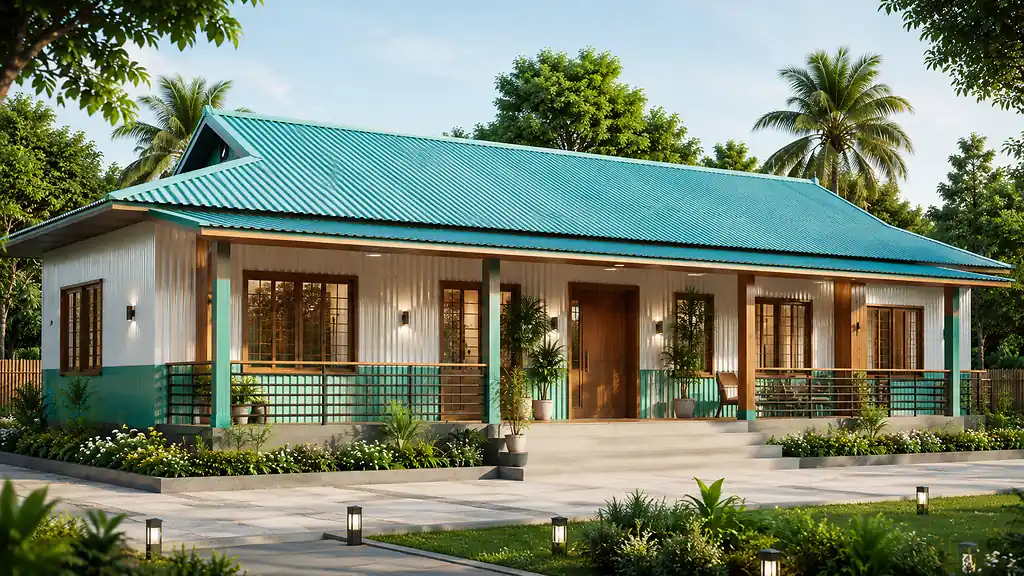
Wood and colored tin create a warm, natural, and premium appearance. You can use wood or wood-finish materials on veranda posts, window frames, doors, wall panels, ceiling sections, or the front facade.
This design is excellent for cottages, resorts, and farmhouses. If real wood is expensive or hard to maintain, wood-finish boards or metal-wood panels can create a similar look.
Best For: Farmhouses, garden cottages, resorts, and vacation homes
10. Luxury Colored Tin House
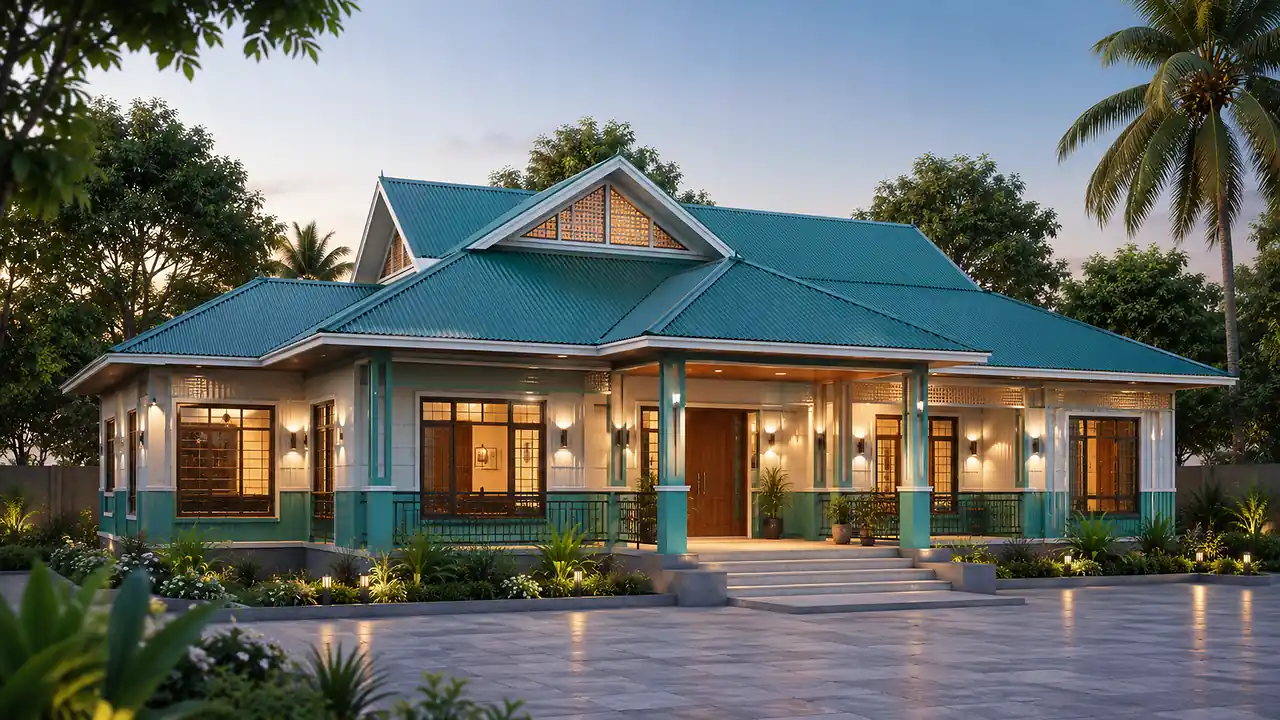
A luxury colored tin house combines tin sheets with premium finishing. It may include large windows, wood-style cladding, a wide deck, outdoor lighting, landscape design, a high ceiling, and a modern roofline.
This type of design is ideal for resorts, premium farmhouses, and private vacation homes. Although the cost is higher, the final look can be impressive and long-lasting if built properly.
Best For: Luxury farmhouses, resort cottages, premium rural homes, and garden villas
Popular Color Combinations for Colored Tin Houses
Choosing the right color is one of the most important parts of a tin house design. The color should match the location, weather, surroundings, and purpose of the building.
| Color Combination | Best Use |
|---|---|
| Blue and White | Modern single-story homes, coastal areas, small family houses |
| Green and White | Rural homes, farmhouses, nature-friendly houses |
| Red and White | Traditional village homes, family houses, veranda-style homes |
| Gray and White | Minimalist houses, offices, modern cottages |
| Brown and Cream | Farmhouses, wood-finish designs, resort-style homes |
| Black and Gray | Luxury houses, duplex-style homes, premium facades |
Practical Color Advice
For hot weather, lighter colors are usually more comfortable because they absorb less heat. White, light blue, light gray, cream, and soft green are practical options. Dark colors such as black, dark red, and deep brown can look premium, but they should be used with insulation and ceiling panels.
How to Reduce Heat in a Colored Tin House
A tin house can become hot if the roof and walls are not planned properly. The good news is that heat can be controlled with smart design choices.
Use Roof Insulation
Insulation sheets, reflective foil, foam layers, or other heat-resistant materials can reduce heat transfer from the roof to the interior. This is especially useful for houses exposed to direct sunlight.
Install a Ceiling
A ceiling creates a barrier between the tin roof and the living space. PVC ceiling, gypsum board, hardboard, or other suitable materials can improve comfort and appearance. An air gap between the roof and ceiling works even better.
Improve Ventilation
Use large windows, roof vents, wall ventilators, and cross ventilation. Hot air should have a clear way to escape. Kitchens and bathrooms should always have separate ventilation.
Plant Shade Trees
Trees around the house reduce direct sunlight and keep the surrounding area cooler. The west side of the house is especially important because afternoon sunlight can make interiors very hot.
Choose Reflective or Light Colors
Light-colored roofing sheets reflect more sunlight than dark sheets. White, cream, light blue, and light gray are good choices for hot areas.
Why Colored Tin Houses Are Becoming Popular
Colored tin houses are popular because they offer a balanced mix of beauty, affordability, speed, and practicality. For many homeowners in Bangladesh, this type of construction is more budget-friendly than a full concrete building while still allowing a modern appearance.
Modern Visual Appeal
Colored tin gives a house a cleaner and more premium look than plain silver sheets. With the right color combination, even a simple house can look organized, fresh, and stylish. Blue and white, green and cream, gray and white, and brown and beige are some of the most popular choices.
Lower Construction Cost
Compared to brick-and-concrete construction, a tin house usually costs less. The final budget depends on the size, tin thickness, frame material, roof type, doors, windows, ceiling, insulation, and labor cost. Still, for rural homes, temporary offices, small shops, and farm structures, colored tin is often a practical choice.
Faster Building Time
Tin houses can be built much faster than traditional buildings. If the frame is prepared and materials are available, the structure can be completed within a relatively short time. This is useful for families who need quick housing, businesses that need site offices, or landowners building cottages or storage rooms.
Good Durability with Proper Materials
Quality colored tin usually comes with protective coating layers that help resist rust, rain, and weather damage. When combined with a strong frame, proper screws, good washers, and correct drainage, a colored tin house can last for many years.
Easy Maintenance
Colored tin houses are easier to maintain than many heavy construction types. Regular cleaning, checking screws, fixing scratches, and preventing water buildup can help protect the roof and walls. The key is to repair small problems before they become expensive.
Things to Consider Before Choosing a Colored Tin House Design
Before selecting any rongin tiner ghorer design idea, think about how the house will be used, where it will be built, and what kind of weather it will face.
Land Size and Layout
For small land, choose a compact plan with one or two bedrooms, a small veranda, a kitchen, and a bathroom. For larger land, you can add a front garden, a side passage, an outdoor seating area, a separate kitchen, or an L-shaped layout.
Budget
Your budget should include more than just tin sheets. You also need to calculate the frame, foundation, screws, ceiling, insulation, flooring, doors, windows, electrical work, plumbing, paint, and labor. Choosing very cheap tin may save money at first but can increase repair costs later.
Roof Slope
A sloped roof is highly recommended in rainy areas. A proper roof slope helps rainwater drain quickly and reduces the risk of rust, leakage, and water damage. Single-slope, double-slope, and gable roofs are all good options.
Ventilation
Tin houses can become hot if air cannot move properly. Use large windows, cross ventilation, roof vents, high ceilings, and ventilators in the kitchen and bathroom. Good airflow makes the house more comfortable and healthier.
Heat Control
Dark-colored tin absorbs more heat than lighter colors. If you choose dark gray, black, red, or brown tin, consider insulation, ceiling panels, roof vents, and shade trees. For hot areas, light blue, white, cream, light gray, and green are safer choices.
Future Expansion
If you plan to add more rooms later, design the frame, foundation, and roof structure accordingly. A little planning in the beginning can make future expansion easier and cheaper.
A complete comparative analysis has been provided to help you understand whether Colored Tin is better or White Tin is better. The comparison covers key factors such as durability, cost, appearance, heat resistance, maintenance requirements, lifespan, and suitability for different types of buildings, enabling you to make an informed decision based on your budget and specific needs.
FAQ - Rongin Tiner Ghorer Design Idea
What is the best rongin tiner ghorer design idea for Bangladesh?
The best design for Bangladesh usually includes a sloped roof, front veranda, large windows, ceiling, insulation, and light-colored tin. This combination helps with rainwater drainage, airflow, heat control, and daily comfort.
Which color is best for a colored tin house?
Light colors such as white, cream, light blue, light gray, and soft green are practical for hot weather. Dark colors look premium but may absorb more heat, so insulation is recommended.
Are colored tin houses durable?
Yes, colored tin houses can be durable if quality tin, strong framing, proper screws, good roof slope, and regular maintenance are used. Poor-quality tin and weak joints can reduce lifespan.
Does a tin house become too hot?
A tin house can become hot without proper planning. Heat can be reduced by using roof insulation, ceiling panels, roof vents, cross ventilation, shade trees, and light-colored roofing sheets.
What type of roof is best for a colored tin house?
A sloped roof is best for most areas in Bangladesh because it allows rainwater to drain quickly. Single-slope, double-slope, and gable roofs are all suitable depending on the design.
Should a colored tin house have a ceiling?
Yes, a ceiling is highly recommended. It reduces direct heat from the roof, improves the interior appearance, and makes the house more comfortable. Adding insulation above the ceiling improves results.
Conclusion
A modern rongin tiner ghorer design idea should balance beauty, comfort, cost, and durability. Colored tin gives homeowners the freedom to build attractive homes without the high cost of full concrete construction. With the right planning, a tin house can be simple, stylish, weather-friendly, and long-lasting.
For small families, a minimalist or two-room tin house is practical. For larger families, an L-shaped layout or wide veranda design works better. For premium projects, farmhouse, duplex-style, wood-finish, or luxury colored tin houses can create a high-value appearance.
The most important points are roof slope, ventilation, insulation, color choice, frame quality, and maintenance. A beautiful color may improve the look, but a smart structure makes the house comfortable and durable.
If you want a tin house that performs well in Bangladesh’s weather, choose light colors, add a sloped roof, use quality coated tin, install ceiling and insulation, and keep enough airflow. With these details in place, a colored tin house can be a practical, affordable, and modern living solution. PHP Arabian Horse Super is a proud brand under the PHP Family, one of Bangladesh’s leading industrial conglomerates. Backed by the reputation and expertise of the PHP Family, the brand is known for delivering high-quality roofing solutions that offer durability, reliability, and long-term performance for residential, commercial, and industrial construction projects.