

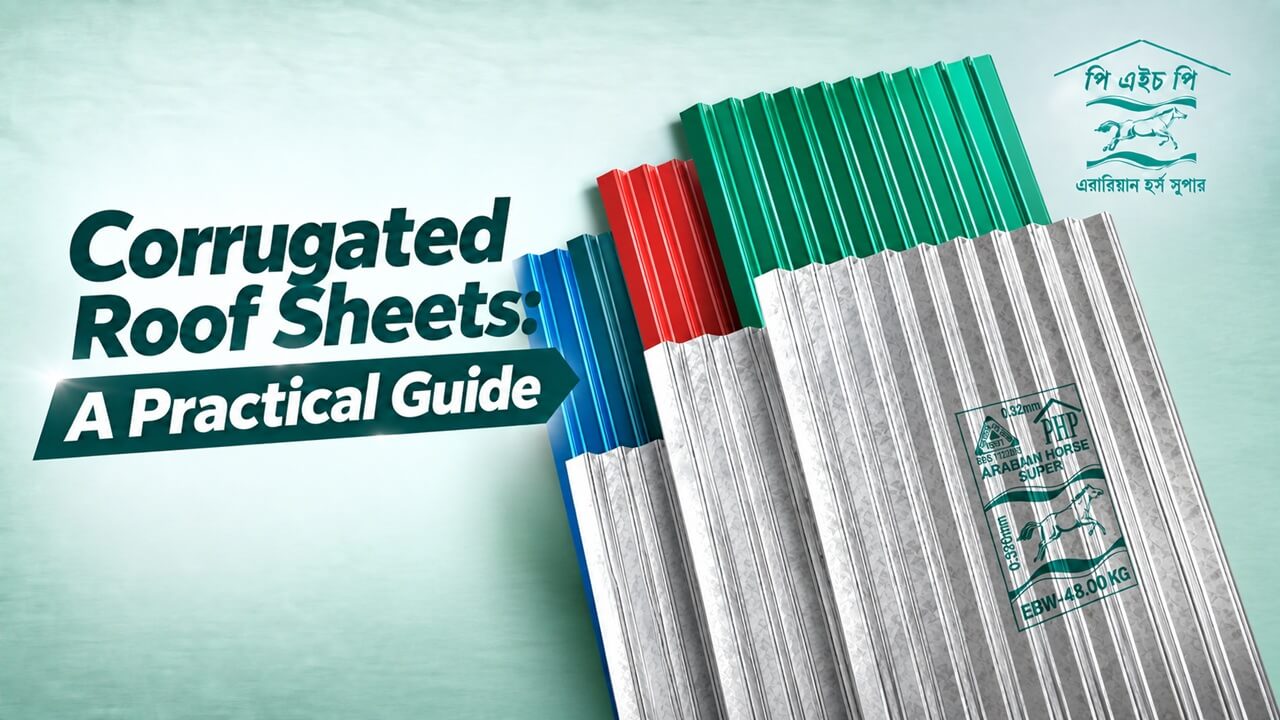
Choosing the right roofing material is an important part of building or renovating a home in Bangladesh. The roof must handle heavy rain, strong sunlight, seasonal wind, and long-term exposure to moisture. For these reasons, corrugated roof sheets remain a familiar roofing option for homes, rural buildings, storage spaces, shops, and other structures across the country.
Their recognizable wave-shaped profile is not only about appearance. The corrugated design helps improve rigidity while also allowing rainwater to move efficiently down the roof. For Bangladeshi families, including those living abroad and planning construction for family members back home, understanding the material, coating, thickness, profile, and installation method can make roofing decisions easier.
What Are Corrugated Roof Sheets?
Corrugated roof sheets are roofing sheets formed into a repeated wave or ribbed pattern. Instead of remaining completely flat, the sheet passes through a forming process that creates raised and lowered sections across its surface.
This shape gives the sheet greater structural stiffness than a flat sheet of similar material. The profile also creates channels that help guide rainwater toward the edge of the roof.
These roofing sheets are commonly manufactured from steel and may receive protective coatings to help reduce corrosion. Depending on the product, coating, finish, and manufacturing process, they can be used for residential, agricultural, commercial, and other building applications.
How Corrugated Roof Sheets Get Their Strength
One of the main advantages of corrugated roof sheets comes from their shape.
A flat metal sheet can flex more easily when pressure is applied. Corrugation creates repeated curves or ribs that increase the sheet’s rigidity. This allows the roofing material to span supporting structures more effectively when the roof is properly designed and installed.
However, overall roof performance does not depend on the profile alone. Thickness, steel quality, support spacing, fasteners, overlap, roof slope, and installation quality all contribute to the final result.
Corrugated Metal Roofing Sheets and Their Basic Structure
Corrugated metal roofing sheets are generally produced by shaping metal sheets into a continuous corrugated profile. When galvanized steel is used, a protective zinc coating is applied to the steel surface to help reduce direct exposure to moisture and air.
The roof sheet typically includes several important characteristics:
- ✅ Base steel material
- ✅ Sheet thickness
- ✅ Protective metallic coating
- ✅ Corrugated profile
- ✅ Width and length
- ✅ Surface finish
- ✅ Fastening and overlap requirements
Buyers should avoid selecting a roofing sheet based only on its appearance. Two sheets may look similar while having different thicknesses, coating levels, profile dimensions, or manufacturing quality.
Why the Corrugated Shape Matters
The corrugated profile serves both structural and practical purposes.
The repeated ridges improve stiffness, while the channels between them help water travel downward. This is particularly important in Bangladesh, where roofs may experience intense rainfall during the monsoon season.
Proper roof slope remains essential. Even a well-designed sheet can develop leakage problems when the slope, overlaps, flashing, or fastening system is incorrect.
Benefits of Corrugated Roof Sheets for Homes
There are several reasons homeowners continue to consider corrugated roof sheets for roofing projects in Bangladesh.
1. Practical Roofing Structure
The corrugated profile adds rigidity without requiring an excessively complex shape. This makes the material suitable for many common roofing structures.
2. Efficient Rainwater Flow
The channels created by the corrugation help direct rainwater toward the lower edge of the roof. When combined with suitable roof slope and drainage planning, this can help reduce standing water.
3. Relatively Fast Installation
Roofing sheets can cover larger roof areas quickly compared with some roofing systems. Installation speed, however, still depends on roof size, structure, worker experience, and proper preparation.
4. Suitable for Different Building Types
Corrugated roofing can be used in houses, sheds, shops, agricultural structures, storage facilities, and other buildings where this roofing system is appropriate.
5. Easy Visual Inspection
Because the roofing surface is exposed and relatively simple, homeowners can often notice loose fasteners, damaged sections, rust spots, debris buildup, or other visible issues during routine maintenance.
Galvanized Corrugated Roofing and Zinc Protection
Steel roofing requires protection because unprotected steel can corrode when repeatedly exposed to moisture and oxygen.
Galvanizing helps address this problem by covering the steel surface with zinc. The zinc coating creates a protective barrier between the steel and the surrounding environment. It can also provide sacrificial protection when small areas of the underlying steel become exposed.
The durability of a galvanized roofing sheet can still depend on several factors, including:
- ✅ Zinc coating level
- ✅ Environmental exposure
- ✅ Salt in the air
- ✅ Standing water
- ✅ Dirt and organic debris
- ✅ Scratches or damaged coating
- ✅ Installation quality
- ✅ Maintenance
This is why buyers should consider more than just the visible surface when comparing roofing products.
Corrugated Metal Roofing Sheets for Bangladesh's Climate
For homes in Bangladesh, corrugated metal roofing sheets should be selected with local climate conditions in mind.
Heavy rainfall means roof slope, overlap, fastening, and drainage must be properly planned. In coastal areas, salt in the air can create a more aggressive environment for metal roofing. In other areas, prolonged moisture, dirt accumulation, or damaged coatings may affect the roof over time.
Ventilation beneath the roof is another important consideration. Metal roofs can absorb heat during sunny weather, so good ventilation and thoughtful house design can help improve indoor comfort.
Choosing Corrugated Roof Sheets for a Family Home
Before buying corrugated roof sheets, homeowners should consider how and where the material will be used.
Important questions include:
- ✅ What is the size of the roof?
- ✅ What thickness is suitable for the structure?
- ✅ What type of coating does the sheet have?
- ✅ What roof slope will be used?
- ✅ How far apart are the supporting members?
- ✅ Which fasteners are recommended?
- ✅ How much overlap is required?
- ✅ Will the house need insulation or improved ventilation?
- ✅ Is the project located in a coastal or high-moisture area?
A qualified contractor, engineer, roofing professional, or authorized product representative can help determine appropriate specifications for a specific project. Before choosing a sheet, homeowners should understand the available sizes and thickness options. Our Dhew Tin size and thickness guide explains common measurements and practical considerations for roofing projects in Bangladesh.
Thickness and Roofing Performance
Thickness is one factor buyers often consider when comparing roofing sheets, but thicker does not automatically mean that every roof will perform better. The correct choice depends on the roof design, supporting structure, span, profile shape, loading conditions, and intended use.
A buyer should therefore avoid choosing a sheet based only on price or a single specification. It is better to evaluate the roofing system as a whole. For families living abroad, this is particularly important because purchasing decisions may sometimes be made remotely. Asking family members or contractors in Bangladesh to confirm the exact product specifications before purchase can help prevent misunderstandings.
Installation Matters as Much as the Roofing Sheet
Even good-quality roofing material can perform poorly if it is installed incorrectly.
Common installation issues may include:
- ✅ Insufficient roof slope
- ✅ Incorrect overlap
- ✅ Poorly positioned fasteners
- ✅ Over-tightened or loose screws
- ✅ Damaged protective coating
- ✅ Inadequate flashing
- ✅ Poor ridge finishing
- ✅ Incorrect support spacing
Professional installation helps ensure that the roofing system performs as intended.
Fasteners, Overlaps and Water Protection
Fasteners should be appropriate for the roofing system and installed in the recommended positions. Washers and sealing components should also be checked where required.
Sheet overlaps must be planned carefully because water can enter through poorly joined sections. Ridge areas, valleys, roof edges, and connections around openings also require proper finishing.
Maintenance Tips for Corrugated Metal Roofing Sheets
Regular inspection can help extend the useful life of corrugated metal roofing sheets.
Homeowners should periodically check for:
- ✅ Loose or missing fasteners
- ✅ Visible rust
- ✅ Scratches
- ✅ Leaves and debris
- ✅ Blocked drainage paths
- ✅ Damaged flashing
- ✅ Loose ridge sections
- ✅ Areas where water remains after rain
Debris should not be allowed to remain on the roof for long periods because trapped moisture can contribute to corrosion. When damage is noticed, timely repair is usually better than allowing the problem to spread.
Why Corrugated Roof Sheets Suit Many Homes in Bangladesh
The combination of structural simplicity, efficient rainwater movement, practical installation, and wide availability has made corrugated roof sheets a common roofing choice in Bangladesh.
They can be particularly useful for homeowners looking for a straightforward roofing system for village houses, semi-rural homes, extensions, utility buildings, and other suitable structures.
The final decision should still depend on product quality, roof design, budget, location, and installation requirements.
For Bangladeshis living in Saudi Arabia, the UAE, Malaysia, Qatar, Kuwait, or other countries, learning about roofing materials before discussing the purchase with family members in Bangladesh can make the process much easier.
How to Choose a Reliable Roofing Sheet
Choosing a reliable roofing sheet requires more than simply comparing prices. The quality of the material, sheet thickness, protective coating, profile design, and manufacturing consistency can all influence how well the roof performs over time. It is also important to buy from a trusted brand or dealer who can provide clear product information and proper guidance.
For homeowners looking for a traditional corrugated galvanized roofing option, PHP Arabian Horse Super Dhew Tin provides a relevant product choice for residential roofing projects in Bangladesh. Those who prefer a more decorative finish can also explore Color Tin in Bangladesh for different residential roofing styles and colour options.
Before making a final decision, buyers should confirm the exact specifications of the roofing sheet and make sure the delivered material matches what was originally selected. Information about installation requirements, recommended fasteners, and available warranty coverage can also help avoid problems later.
For Bangladeshis living abroad and arranging roofing materials for a family home in Bangladesh, clear communication is especially important. Sharing the exact product name, specifications, and purchase details with family members can make the buying process smoother and reduce the risk of receiving the wrong roofing material.
Final Thoughts
Corrugated roof sheets remain an important roofing option for many homes and buildings in Bangladesh. Their corrugated profile adds rigidity, helps channel rainwater, and makes them practical for a wide range of roofing applications.
However, choosing the right roofing sheet involves more than selecting a familiar design. Steel quality, protective coating, thickness, roof slope, support spacing, installation, and maintenance all influence long-term performance.
By understanding these factors, homeowners and overseas Bangladeshis planning construction for their families can make more informed roofing decisions and choose materials that match the needs of the building.